Jab Doctor Ne Bola — Your Spine Has Mild Scoliosis
Scoliosis. Yeh word sunne mein hi darr lagta hai. Lekin sach yeh hai ki mild scoliosis — 10 to 20 degree Cobb angle — bahut common hai. Roughly 2-3% adults mein hoti hai, aur majority logon ko pata hi nahi hota jab tak koi X-ray accidentally check nahi karta.
Meri beti ko 16 saal mein pata chala. School physical examination mein doctor ne notice kiya. Cobb angle 14 degree tha — mild category. No bracing needed, no surgery indicated. But: regular physiotherapy, yoga, and targeted massage therapy recommended.
Hum dono kaafi confused the. Kya massage karna theek hai? Kya spine ko daba nahi jaata? Kya kuch aur bure hoga iske baad? Raipur SPA mein ek detailed consultation ne in saare sawalon ka jawab diya. Aur jo information mili — woh main yahan share kar raha hoon.
Scoliosis Kya Hai — Ek Simple Explanation
Normal spine, when seen from behind, is perfectly straight. Scoliosis is a lateral (side-to-side) curvature of the spine. Instead of a straight line, the spine curves like the letter C or S.
There are different types:
- Idiopathic scoliosis — most common, cause unknown, typically appears in adolescence (girls more than boys)
- Congenital scoliosis — from birth, due to vertebral malformations
- Neuromuscular scoliosis — due to conditions like cerebral palsy or muscular dystrophy
- Degenerative scoliosis — appears in adults due to disc and joint degeneration with age
Severity classification:
- Mild: below 20 degrees — monitoring and conservative management
- Moderate: 20-40 degrees — bracing, intensive physiotherapy
- Severe: above 40-50 degrees — surgical intervention often considered
Most adults who discover they have scoliosis fall in the mild category. The focus is not on 'fixing' the curve (you can't straighten a mild scoliosis with massage) — but on managing symptoms, preventing progression, and improving quality of life.
Can Massage Therapy Help With Scoliosis?
Yeh tha main sawaal jo maine Raipur SPA ke therapist se poocha. The honest answer: massage cannot correct the structural curve. But massage can do several important things that significantly improve scoliosis-related quality of life:
1. Reduce muscle imbalance. In scoliosis, muscles on the concave side of the curve are shortened and tight, while muscles on the convex side are lengthened and often weak. This imbalance causes pain and fatigue. Targeted massage addresses this asymmetry.
2. Decrease pain. The muscles working overtime to compensate for the abnormal spinal curve become chronically tense and painful. Massage reduces this tension, providing significant pain relief.
3. Improve proprioception. Regular bodywork improves the body's awareness of its own position — helping people with scoliosis develop better postural habits and awareness.
4. Reduce the fatigue of compensation. The body works extra hard to maintain balance with a curved spine. Massage reduces the muscular load of this constant compensation work.
5. Psychological relief. Living with a chronic structural condition creates stress and anxiety. Therapeutic touch and massage has well-documented benefits for mental health alongside physical.
The Specific Scoliosis Massage Protocol at Raipur SPA
Raipur SPA's approach to scoliosis massage is not a standard oil massage. It's a specifically adapted protocol based on your individual curve pattern. Before treatment, they review your X-ray or MRI report — yes, they actually want to see the imaging. This tells them the location and direction of the curve, the degree, and which muscles are affected on which side.
The session typically includes:
Postural assessment: The therapist observes you standing, sitting, and moving before touching. They look at shoulder height asymmetry, rib prominence, waist asymmetry, and hip levelness. This map guides the entire session.
Effleurage (warming): Long gliding strokes over the entire back to warm the tissue and begin the assessment through palpation. The therapist is feeling for areas of tightness, ropiness, and asymmetry as they work.
Targeted work on the concave side: The muscles on the inner side of the curve are chronically shortened. Deeper work here — petrissage, myofascial release, pin-and-stretch techniques — to lengthen and release these shortened tissues.
Lighter, lengthening work on the convex side: These muscles are already elongated and often fatigued. The goal is to reduce fatigue and improve circulation without further stretching.
Paraspinal release: Work along the erector spinae muscles on both sides, adjusting depth and direction based on the curve pattern.
Hip and pelvis work: Scoliosis almost always involves some degree of pelvic asymmetry. Releasing hip flexors, gluteal muscles, and iliotibial band on the appropriate sides is an important part of scoliosis management.
Closing integration: Gentle Swedish strokes over the entire back to integrate the work done and allow the nervous system to process the session.
What NOT to Do With Scoliosis Massage
This is equally important. Some massage approaches can aggravate scoliosis symptoms or are contraindicated:
- Do not do vigorous tapotement (percussion) over the spine — particularly in cases of osteoporosis or bone involvement
- Do not apply strong axial pressure to the spine — no pushing down into the vertebrae
- Do not do identical work on both sides — scoliosis massage must be asymmetric, treating each side differently based on its position in the curve
- Avoid very deep pressure near nerve roots — in severe scoliosis, altered anatomy can mean nerves are more vulnerable
- Do not attempt spinal manipulation — this is outside massage scope and contraindicated for scoliosis without specific training
A therapist who treats scoliosis like a regular back massage isn't doing it correctly. Make sure your therapist understands the condition and adapts accordingly.
How Often and for How Long?
For mild scoliosis with pain and stiffness:
- Initial course: weekly sessions for 6-8 weeks
- Maintenance: bi-weekly or monthly depending on how you respond
- During growth spurts (for adolescents): more frequent monitoring and treatment
Combine massage with:
- Specific scoliosis yoga or the Schroth Method exercises
- Swimming — excellent for scoliosis
- Core strengthening — especially for the weaker side
- Postural awareness training
What About Ayurvedic Approaches?
At Raipur SPA, the Ayurvedic therapists also offer treatments that support scoliosis management:
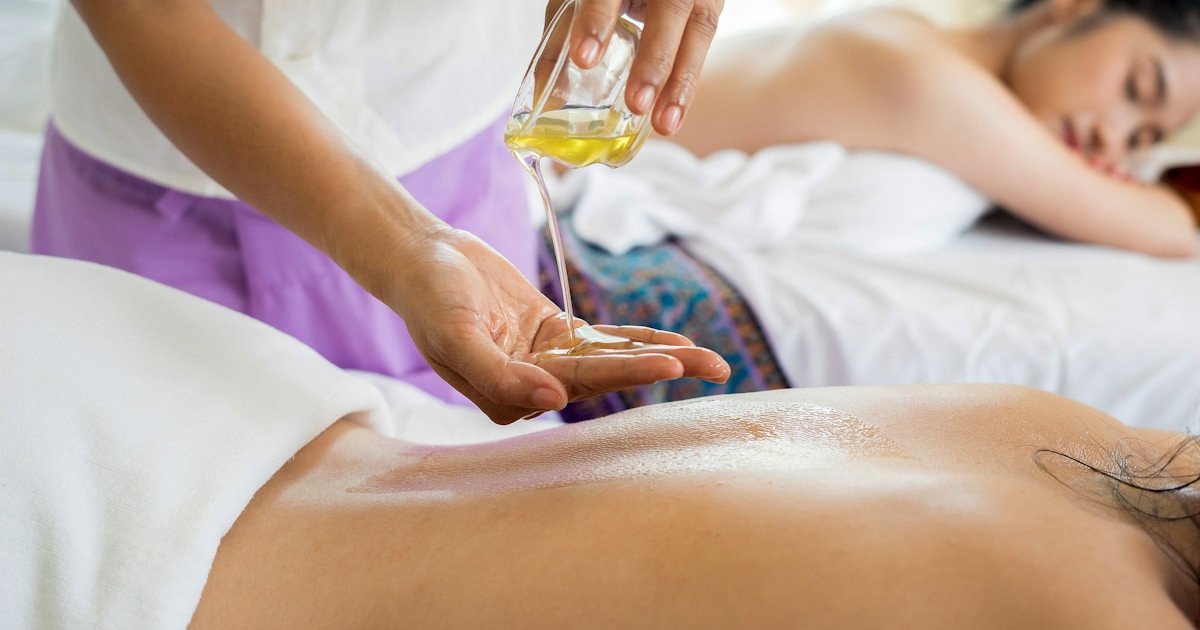
Kati Basti with Manya focus: For scoliosis affecting the lumbar region, Kati Basti (oil pool therapy on the lower back) can provide significant relief from the chronic muscle tension and disc stress that the abnormal curvature creates.
Greeva Basti: For thoracic and cervical scoliosis, the oil pool therapy in the neck region helps reduce tension and inflammation.
Abhyanga with specific oils: Full body Ayurvedic oil massage with Mahanarayan Taila or Ksheerabala Taila nourishes the musculoskeletal system, addresses Vata imbalance (which governs movement and structure), and reduces pain.
Swedana (herbal steam): Post-massage steam therapy improves the penetration of medicated oils and provides additional muscle relaxation for the chronically tense muscles of scoliosis.
Mere Anubhav — Meri Beti Ka 6 Mahine Ka Journey
Hum Raipur SPA mein 6 mahine se ja rahe hain. Monthly check-ups mein curve degree mein koi significant change nahi aaya (jo expected tha — massage curve nahi badlta). Lekin jo badla:
- School mein lambe baith ne ke baad pain bahut kam hua
- Posture awareness improve hui — woh khud notice karti hai jab slouch ho jaati hai
- Shoulder height asymmetry slightly improved — muscles balance hue thoda
- Rib prominence mein subjective improvement
- Overall: zyada active, zyada comfortable
Yeh cure nahi hai. Lekin yeh management hai — aur good management of a chronic condition is everything.
Booking at Raipur SPA
If you or someone in your family has scoliosis and you'd like to explore targeted massage therapy, reach out to Raipur SPA directly. Bring your X-ray report if available — the more information the therapist has, the better the treatment can be customized.
WhatsApp: +91 9993693999 | Location: Samta Colony, Raipur
Tell them your Cobb angle, which region of the spine (lumbar, thoracic, cervical), and your primary complaints (pain, fatigue, cosmetic concerns). They'll design a protocol appropriate for your specific presentation.
Scoliosis is a lifelong condition to manage, not a problem to panic about. With the right approach — consistent therapy, appropriate exercise, and professional support — people with mild to moderate scoliosis live active, full, comfortable lives. That's the goal. And Raipur SPA can be a meaningful part of reaching it.
Explore Related Services
Enjoyed This Article?
Stop reading about relaxation — come experience it firsthand at Raipur SPA.
