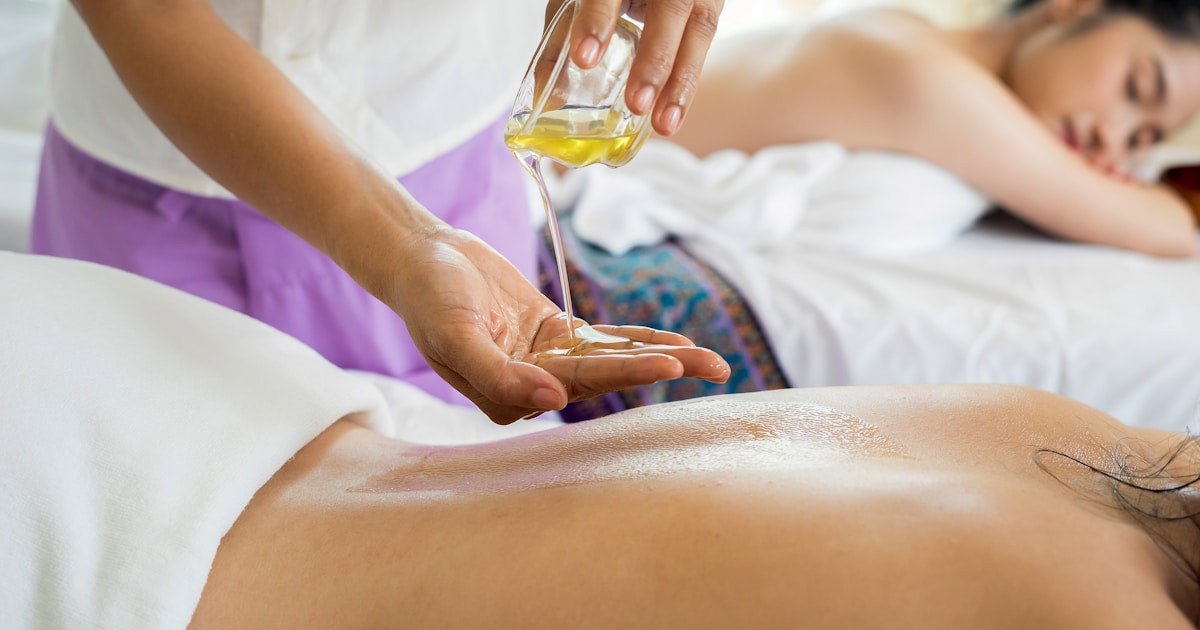
Walk into any pharmacy in Raipur and you will find an entire section dedicated to hair oil products — from mass-market coconut oils to premium "Ayurvedic" formulations in attractive packaging. Yet despite widespread use of these products, hair fall and scalp problems continue to increase. The reason is simple: applying oil at home and receiving a professional Shiroabhyanga are fundamentally different experiences with vastly different outcomes. Understanding this difference is the key to making an informed decision about your hair and scalp health.
What Is a Regular Head Massage?
A regular head massage — as most people perform at home or receive at a local parlour — typically involves applying some quantity of oil to the scalp and rubbing it in with the fingertips for five to fifteen minutes. The movements are usually random or based on intuition rather than anatomical knowledge. The oil used is often a standard commercial product containing mineral oil as a base (which clogs pores rather than nourishing them) with synthetic fragrance and small quantities of herbal extracts. The pressure applied is inconsistent, the duration is short, and there is no systematic approach to covering all zones of the scalp or addressing specific health conditions.
This approach provides some benefits — the act of touch itself is soothing, and any oil application is better than none for very dry scalps. But it barely scratches the surface of what Ayurvedic shiroabhyanga achieves through its systematic, therapeutic protocol.
What Makes Shiroabhyanga Different?
1. Medicinal Oil Quality and Formulation
The foundation of shiroabhyanga's superiority begins with the oil. Authentic Ayurvedic medicated oils used in shiroabhyanga are not merely herb-infused oils — they are complex pharmaceutical preparations called "Taila" that undergo a precise manufacturing process called "Taila Paka Vidhi." Herbs are first prepared as decoctions, then slowly combined with the base oil and milk (for certain formulations) and cooked at controlled temperatures for hours or even days until the water evaporates and the oil is saturated with the therapeutic compounds of the herbs.
The result is an oil that is categorically different from anything available in a retail store. Bhringraj Taila, for example, contains bioactive compounds from Bhringraj that have been proven to inhibit 5-alpha reductase (the enzyme driving pattern baldness), stimulate follicular cell proliferation, and extend the anagen (growth) phase of the hair cycle. These compounds simply cannot be delivered to hair follicles through casual at-home oil application with insufficient penetration technique.
2. Marma Point Activation — The Game Changer
This is the single most important distinction between shiroabhyanga and a regular head massage. Marma points are specific vital anatomical locations — typically junctions of muscles, veins, ligaments, bones, and joints — where Prana (life force) concentrates and where intervention has amplified effects on the entire system. There are 107 Marma points in the body; 37 of them are located in the head and neck region that shiroabhyanga addresses.
A trained Ayurvedic therapist's knowledge of these points allows them to unlock healing responses that simply cannot be achieved through random rubbing. For example, sustained pressure on the Adhipati Marma at the crown of the head (Brahmarandhra) directly stimulates the cerebral cortex and has measurable effects on EEG brain wave patterns, shifting the brain toward alpha wave dominance — the neurological signature of relaxed alertness. This cannot happen through self-massage because the untrained person does not know the exact location, pressure, and duration required.
3. Professional Technique — Pressure, Rhythm, and Coverage
Shiroabhyanga uses a systematic sequence of specific massage techniques that have been refined over centuries of clinical observation. Effleurage strokes in specific directions follow the underlying lymphatic drainage pathways, promoting removal of metabolic waste from scalp tissue. Deep petrissage (kneading) of the galea aponeurotica (the tough fibrous layer over the skull) releases restricted movement that limits blood flow. Tapotement (percussion) on specific zones stimulates nerve endings and increases local circulation dramatically. Friction movements around the hairline and temples break up fascial adhesions that restrict follicle mobility.
A regular head massage applies random pressure without this anatomical logic. The coverage is often uneven — people naturally favor certain areas and neglect others. The occipital region (back of the head), which contains the Vidhura and Manya Marma points critical for cervicogenic headache relief, is almost always under-addressed in self-massage.
4. Neck and Shoulder Integration
Shiroabhyanga is not just a head massage — it is a comprehensive treatment of the entire Shiro (head) region, which includes the neck, shoulders, and upper back. This integration is crucial for therapeutic effectiveness. Tension in the trapezius, levator scapulae, and sternocleidomastoid muscles directly restricts blood flow to the scalp through the vertebral and external carotid artery branches. Tightness in these muscles also causes referred pain patterns that contribute to tension headaches and migraines.
By beginning with a thorough shoulder and neck treatment before addressing the scalp, professional shiroabhyanga ensures that blood can flow freely to the scalp before the oil is applied. The scalp massage then builds on this improved circulation rather than fighting against vascular restriction. A regular head massage completely ignores this preparatory work.
5. Oil Temperature and Application Method
The temperature at which Ayurvedic oil is applied dramatically affects its penetration and therapeutic benefit. Cold or room-temperature oil sits on the scalp surface without meaningful penetration. Warm oil (around 38-40 degrees Celsius — just above body temperature) causes thermal vasodilation in the scalp capillaries, opens the follicular pores, and significantly enhances the absorption of the oil's active compounds into the deeper dermal layers where the hair bulbs reside.
Professional shiroabhyanga uses purpose-designed oil warmers that maintain precise temperature throughout the session. The therapist applies oil in small quantities at a time directly to the scalp (not the hair shaft) using a specialized pouring technique that ensures even distribution from root to tip. At home, most people warm oil approximately in their hands or use room temperature oil — far below the therapeutic threshold.
Results Comparison: What You Can Expect
Regular Home Head Massage (with commercial oil, 10 min, 3x per week)
- Mild improvement in scalp moisture over 4-6 weeks
- Some reduction in stress at the time of massage
- Minimal improvement in hair fall (if the cause is nutritional or stress-related)
- No improvement in Marma-point related conditions (headache, cervical issues, eye strain)
Professional Shiroabhyanga (with medicated oil, 50 min, weekly for 8 weeks)
- Significant reduction in hair fall (60-80% improvement for stress/nutritional causes)
- Measurable reduction in headache frequency and severity
- Improved sleep quality reported by 85% of regular clients
- Reduced neck and shoulder stiffness and cervical pain
- Improved scalp health: reduced dandruff, oiliness, dryness
- Enhanced mental clarity and reduced anxiety symptoms
- Visible improvement in hair texture, shine, and volume
Can You Combine Both Approaches?
Absolutely — and this is the ideal strategy. Professional shiroabhyanga sessions provide the deep therapeutic reset that requires trained hands and professional-grade oils. Between sessions, daily home oil application (even for five to ten minutes) maintains the benefits and creates a cumulative nourishing effect on the scalp. Your therapist at Raipur Spa can recommend the appropriate oil for your home use based on your Dosha and hair concerns — so your home practice complements rather than contradicts the professional treatment.
How to Get Shiroabhyanga in Raipur
Raipur Spa offers authentic Ayurvedic shiroabhyanga performed by trained therapists using genuine medicated oils. Our three shiroabhyanga packages are priced at Rs. 799 (Classic, 30 min), Rs. 1,299 (Signature Head Ritual, 50 min), and Rs. 1,999 (Royal Head and Face Ritual, 75 min). Each session begins with a personalized consultation to select the right oil and protocol for your specific needs.
Located at Aditya Enclave, VIP Road, Raipur — contact us at +91 98271 80103 to book. Give your hair and nervous system the professional therapeutic attention they deserve.
Enjoyed This Article?
Stop reading about relaxation — come experience it firsthand at Raipur SPA.
Explore Related Services
Keep Reading
Related Articles
Health Tips
Foot Reflexology Raipur — Paon Ki Massage Se Poore Body Ko Healing
7 min read · 12 Apr 2026
Health Tips
Couple Spa Package Raipur — Romantic Experience Guide 2026
6 min read · 12 Apr 2026
Health Tips
Body Massage Raipur Mein Kitna Faydemand Hai? Complete Guide 2026
9 min read · 12 Apr 2026
Enjoyed This Article?
Stop reading about relaxation — come experience it firsthand at Raipur SPA.
Book Our Massage Services
Raipur SPA, Samta Colony | WhatsApp: +91 7987 303 127 | ₹399–₹1,999
Explore Related Services
Keep Reading
Related Articles
Health Tips
Foot Massage in Raipur: Paon Ki Thakan Utaaro, Poori Body Ko Aaram Do
5 min read · 13 Apr 2026
Health Tips
Hot Oil Massage in Raipur: Garmi Ke Saath Deep Healing Ka Experience
5 min read · 13 Apr 2026
Health Tips
Aromatherapy Massage in Raipur: Essential Oils Se Karein Mind-Body Healing
4 min read · 13 Apr 2026
Enjoyed This Article?
Stop reading about relaxation — come experience it firsthand at Raipur SPA.
 Chat with us