Back Pain: The Epidemic Nobody Takes Seriously Enough
Ask a group of people in Raipur how their back feels and you will get more honest answers than you might expect. Lower back pain, upper back tension, mid-back stiffness — these are not occasional inconveniences for most adults. They are chronic companions, managed with painkillers and ignored until they flare badly enough to force attention. Then there is a few days of rest, some ibuprofen, maybe a heat pad, and back to the grind until the next flare.
This is a terrible approach to a solvable problem. Back pain, in most cases — the mechanical, non-pathological kind that the vast majority of sufferers have — responds extremely well to consistent therapeutic massage. Not as a cure, but as a central part of a management strategy that genuinely improves quality of life and gradually reduces the frequency and severity of flares.
Understanding the Back: What We Are Actually Dealing With
The back is a remarkable and complex structure. The spine — 33 vertebrae stacked from the sacrum to the skull — provides both structural support and a protected conduit for the spinal cord and the nerve roots that branch from it. Surrounding the spine are multiple layers of muscle: the large, superficial muscles (trapezius, latissimus dorsi, erector spinae group) that produce gross movement and bear sustained postural loads, and the smaller, deeper muscles (multifidus, rotatores) that control fine spinal movement and stability.
Between all of these muscles runs fascia — connective tissue that connects everything together and becomes a source of pain and restriction when chronically overloaded. The facet joints of the spine, the intervertebral discs, and the surrounding ligaments are all also potential pain generators, and the lines between muscular pain, joint pain, disc-related pain, and nerve pain are often blurry in practice.
What this means practically: back pain usually has multiple contributing factors, and a comprehensive approach addresses more than just the most obvious symptom.
The Most Common Back Pain Patterns and What Causes Them
Lower Back Pain
The most prevalent of all. Typically driven by a combination of weak core musculature, tight hip flexors (from prolonged sitting), tight hamstrings pulling the pelvis into posterior tilt, and overloaded lumbar erector spinae. Raipur's significant sedentary workforce — government offices, IT companies, banking and finance sectors — has an enormous proportion of people in this pattern. The lumbar spine bears the full weight of the upper body plus the mechanical disadvantage of poor posture for 8-10 hours daily.
Upper Back and Thoracic Tension
Driven primarily by forward head posture and shoulder rounding from desk work. The upper trapezius and rhomboids become chronically overloaded trying to hold the head and shoulders in a position they were not designed to maintain. This manifests as the burning, aching tension between the shoulder blades and at the tops of the shoulders that most desk workers know intimately.
Sacroiliac Pain
The sacroiliac (SI) joints where the sacrum meets the pelvis are a frequently overlooked pain generator. Dysfunction here — often from asymmetrical loading, leg length discrepancy, or pelvic instability — produces deep, dull pain at the base of the spine that can refer into the buttock and upper thigh. Many people attribute this to disc problems when the SI joint is the actual source.
How Back Massage Addresses These Problems
Targeted back massage works through several mechanisms simultaneously:
Direct muscle tension release: The mechanical pressure of massage disrupts the feedback loops maintaining chronic muscle contraction. Trigger point therapy — sustained pressure on hyperirritable muscle knots — produces reflex relaxation of the entire affected muscle. For the paraspinal muscles and upper back, this effect is particularly pronounced with proper technique.
Fascial release: Chronic postural stress creates fascial thickening and adhesion throughout the back. Myofascial release techniques in back massage address these adhesions, restoring the gliding mobility between tissue layers that healthy back movement requires. This is often the component of back massage that produces the most dramatic improvement in the sense of freedom of movement.
Circulation restoration: Chronically overloaded muscles have impaired circulation — the constant contraction compresses local blood vessels and lymphatics. The compression and release of therapeutic massage restores this circulation, clearing accumulated metabolic waste products and delivering oxygenated blood to tissue that has been effectively ischemic (low in oxygen) due to chronic contraction.
Nervous system regulation: As detailed in our stress and massage science article, therapeutic back massage activates the parasympathetic nervous system, reducing the baseline neural drive that keeps muscles in chronically elevated tone. This central nervous system effect is as important as the peripheral mechanical effects for long-term pain management.
The Relationship Between Back Massage and Exercise
Massage and exercise are complementary approaches to back health — not alternatives to each other. Massage releases accumulated tension and restores mobility; exercise builds the strength and stability that prevents re-accumulation. Doing one without the other produces incomplete results.
The most effective approach: therapeutic back massage to restore mobility and reduce pain, combined with a progressive core strengthening programme (not sit-ups — stabilisation exercises like those in physiotherapy protocols), regular stretching of hip flexors and hamstrings, and ongoing monthly maintenance massage to prevent re-accumulation. This combination produces lasting improvement in back pain that neither approach achieves alone.
What a Back Massage Session at Raipur SPA Involves
Your session begins with a brief assessment of your posture and range of motion — this takes 3-5 minutes and gives the therapist crucial information for tailoring the treatment. We ask about the nature and history of your pain, any diagnoses you have received, current medications, and what previous treatments have or have not helped.
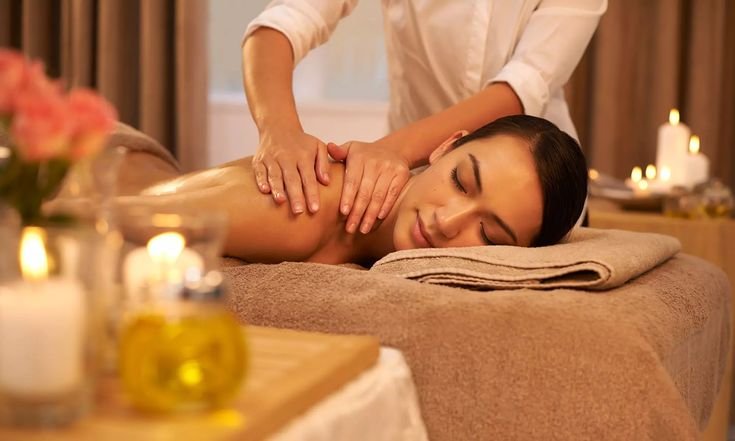
The massage itself typically begins prone (face down), addressing the full back from the lumbar region to the neck and shoulders. Your therapist will combine Swedish effleurage and petrissage techniques for overall tissue warming with more targeted trigger point and myofascial techniques for specific problem areas. For clients with significant lower back issues, side-lying positioning allows better access to the lumbar and hip region and reduces the load on the lumbar spine during treatment.
For clients with moderate to severe back pain, we recommend a series approach: weekly sessions for 4-6 weeks, then fortnightly for a month, then monthly maintenance. This structured approach produces much more significant and lasting results than occasional treatments.
Frequently Asked Questions
Can massage help a herniated disc?
Massage can help with the muscle spasm, tension, and pain that typically accompany disc herniation, but it does not physically repair the disc. For disc conditions, always have a medical diagnosis and work with your orthopaedic doctor or physiotherapist to determine how massage fits into your overall treatment plan.
Should I use heat or ice before back massage?
Heat before massage — a heat pad applied to the area for 15-20 minutes — is generally helpful as it softens tissue and improves circulation. Ice is generally not recommended immediately before massage as cold tissue is harder to work effectively. Ice has a role in acute injury management but is less appropriate for the chronic tension patterns that most back massage addresses.
What if my back is very painful right now?
In acute pain flares (severe pain that began in the last 48-72 hours), rest and anti-inflammatory measures are the first-line approach. Once the acute flare has subsided to a more manageable level — typically 3-5 days — therapeutic massage is appropriate and very helpful. Do not book massage during an acute severe pain episode without medical guidance.
Book your back massage at Raipur SPA — call +91 7987 303 127 or visit our back massage page.
Enjoyed This Article?
Stop reading about relaxation — come experience it firsthand at Raipur SPA.
